
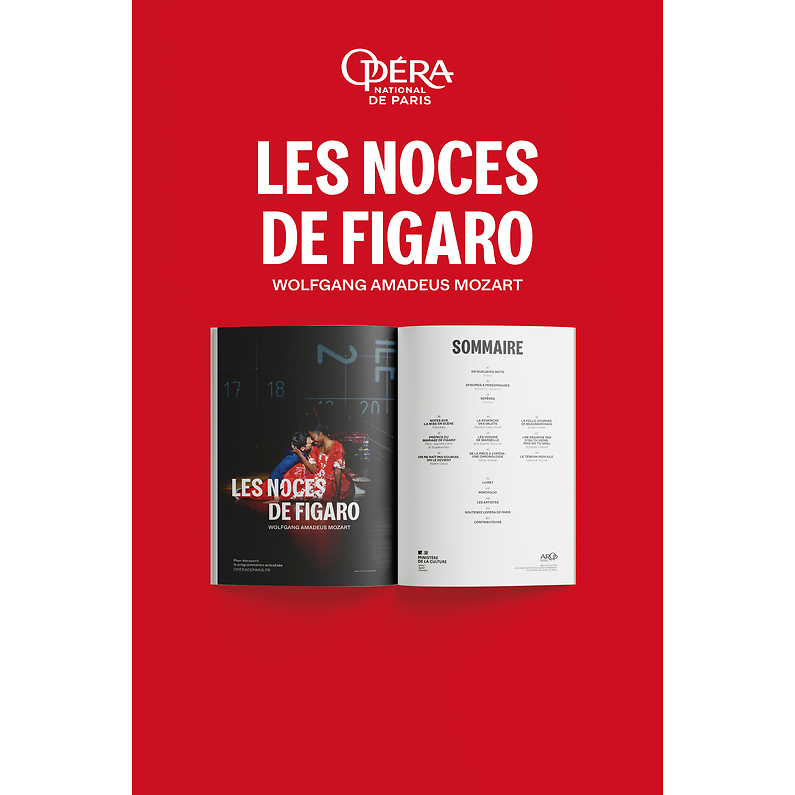
LE NOZZE DI FIGARO / PROGRAM / Garnier / November / 2025
Description
With Figaro due to marry Susanna, Count Almaviva intends to exercise his "droit de cuissage" over her - a plan thwarted thanks to the ingenuity of the bride and groom-to-be.
Inspired by Beaumarchais' comedy The Marriage of Figaro, banned for several years because of its criticism of privilege, the first collaboration between Mozart and his librettist Da Ponte had to overcome Emperor Joseph II's censorship by focusing their work on love and human relationships.
As a result, the opera, premiered in Vienna in 1786, rapidly became one of Mozart's most popular works. Although toned down, class conflicts are no less present in his music, sometimes even with force.
Director Netia Jones demonstrates this by setting the action backstage at the Palais Garnier, transposing questions of social hierarchy to the power struggles of an opera house.
Product information
- Technical specification
Duration : 3h30 with 1 interval
Language : Italian
Surtitle : French / English
Opening
First part
100 min
Intermission
35 min
Second part
75 min
End
Opera in four acts (1786)
After Pierre Augustin Caron de Beaumarchais, The Marriage of Figaro